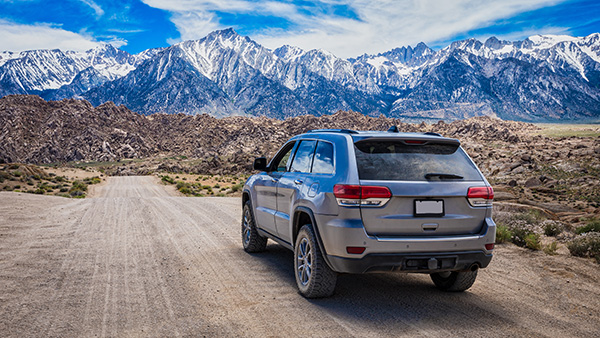
A car that feels fine on level roads but starts shaking uphill is reacting to load. Climbing forces the engine and drivetrain to work harder, so weak parts that stay quiet during easy driving can become obvious once more torque is required.
That pattern narrows the search, but it does not point to only one cause. Ignition problems, fuel delivery issues, worn engine mounts, damaged axles, transmission concerns, and tire or driveline faults can all produce a shake that appears mainly during uphill acceleration.
A Weak Ignition System Can Misfire Under Load
Spark plugs and ignition coils have a harder job when the engine is pulling uphill. Cylinder pressure rises as you press the gas, and the spark must be strong enough to ignite the air and fuel mixture under that added pressure. A worn plug or weak coil may work well enough during light cruising but begin to misfire when the engine is under load.
The shake may feel like a stumble, buck, or repeated hesitation rather than a perfectly steady vibration. You may also notice reduced power, worse fuel economy, or a check engine light. If that light flashes, the misfire is severe enough to risk damage to the catalytic converter, so continuing to push the vehicle uphill is not a good idea.
Fuel Delivery Problems Become Clear On A Climb
The engine needs more fuel when it is asked to accelerate uphill. A weak fuel pump, restricted filter, dirty injectors, or pressure problem may supply enough fuel during flat-road driving but fall behind when demand increases. The result can feel like shaking, surging, or the car briefly losing power.
Fuel problems do not always trigger a warning light right away. The vehicle may drive normally during gentle trips and only act up on long grades, freeway ramps, or when carrying extra weight. Testing fuel pressure, volume, and injector operation helps show whether the engine is being starved when the load rises.
Engine And Transmission Mounts Can Let The Drivetrain Move
Engine and transmission mounts hold the drivetrain in place while absorbing normal movement. During uphill acceleration, the engine twists harder against those mounts. If one is cracked, collapsed, leaking, or separated, the extra movement can send vibration through the steering wheel, seat, or floor.
A bad mount may also cause a clunk when shifting into drive or reverse, or a thump when getting on and off the gas. The engine can run perfectly well while the cabin still shakes because the mount is no longer isolating vibration. A controlled inspection can reveal excess drivetrain movement and damaged rubber.
CV Axles Can Shake When Torque Increases
On front-wheel-drive and many all-wheel-drive vehicles, CV axles transfer power to the wheels. Inner CV joints are especially known for causing vibration during acceleration. The shake may become stronger uphill because more torque is passing through the joint.
This type of vibration often improves when you ease off the gas. A torn boot, grease loss, worn joint, bent axle shaft, or poor-quality replacement axle can all be involved. Outer CV joints are more likely to click during turns, while inner joint wear is more closely associated with shaking under load.
Transmission Problems Can Feel Like Engine Trouble
An automatic transmission may shudder, slip, or hesitate when it has to downshift for a hill. Old fluid, torque converter problems, worn internal clutches, pressure concerns, or control issues can all create a vibration that appears during harder acceleration.
Watch how the engine RPM behaves. If RPM rises sharply but the vehicle does not accelerate normally, slippage may be present. If the car shudders at a certain speed or during a specific gear change, the transmission or torque converter deserves closer attention. A road test and scan data can help separate transmission behavior from an engine misfire.
Driveshaft And U-Joint Wear Can Show Up Uphill
Rear-wheel-drive and four-wheel-drive vehicles use driveshafts and joints to carry power toward the wheels. Worn U-joints, a damaged center support bearing, driveline angle problems, or an out-of-balance shaft can create vibration during acceleration.
The extra torque of an uphill pull can make the symptom much stronger. You may feel the shake through the center of the vehicle or under the seats rather than mainly through the steering wheel. Some driveline problems also cause a clunk when shifting between drive and reverse or when changing from acceleration to coasting.
Tires And Wheels May Add To The Vibration
Tire and wheel problems usually follow vehicle speed, but they can still feel worse while accelerating. A separated tire belt, bent wheel, poor balance, or uneven tread can create shaking that becomes noticeable as the car gains speed uphill.
A useful clue is whether the vibration remains after you stop accelerating. If it continues at the same road speed, tires, wheels, wheel bearings, or other rotating parts may be involved. If it fades quickly when you lift off the gas pedal, the engine, mounts, axles, transmission, or driveline are more likely suspects.
Why The Exact Pattern Matters
The details help narrow down the cause. A shake only on steep hills suggests a load-related problem with the engine or drivetrain. A vibration at one exact speed may point more toward tires or the driveshaft. Bucking with a flashing check engine light strongly suggests a misfire.
An inspection should include a road test under the same conditions that produce the problem. Scan data, ignition checks, fuel pressure, mount condition, axle play, transmission behavior, tire condition, and driveline parts can then be compared instead of replacing parts based on the feeling alone.
Get Uphill Acceleration Vibration Diagnostics In Covington, WA, With Valley Automotive
If your car shakes, bucks, or loses power only when accelerating uphill, Valley Automotive in Covington, WA, can inspect the ignition system, fuel delivery, mounts, axles, transmission, tires, and driveline. Finding the source early can prevent a small load-related problem from becoming a more expensive repair.
Contact us to schedule an appointment.