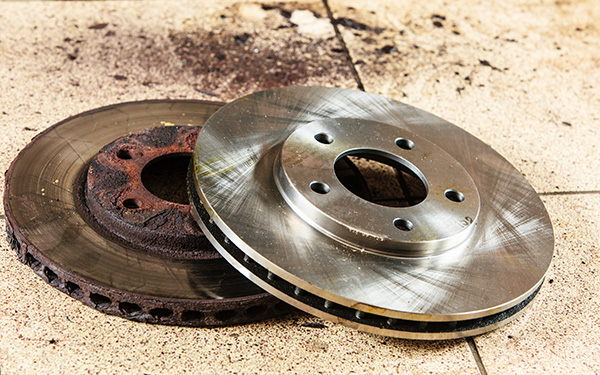
Brake rotor runout describes how much a brake rotor moves from side to side as it rotates. Ideally, the rotor should spin in a nearly perfect plane. If it wobbles even slightly, the brake pads can make uneven contact with the rotor surface, and over time that can lead to pedal pulsation, steering wheel vibration, or uneven rotor wear.
Runout is measured in thousandths of an inch or hundredths of a millimeter, so the amount involved is very small. That is why it cannot be judged accurately by sight alone. A rotor may look perfectly straight while still having enough lateral movement to cause problems after several thousand miles of driving.
What Causes Brake Rotor Runout?
Runout can come from the rotor itself, but the rotor is not always the original source. Rust, dirt, or scale trapped between the rotor and wheel hub can keep the rotor from sitting completely flat. Even a small amount of contamination on the mounting surface can create measurable movement at the outer edge of the rotor.
A bent hub, worn wheel bearing, improper wheel installation, or uneven lug nut torque can also contribute. In some cases, a newly installed rotor develops runout immediately because the mounting surface was not cleaned carefully enough before assembly. That is one reason proper preparation during brake work is so important.
How Technicians Measure Rotor Runout
The most common tool for checking runout is a dial indicator. The technician mounts the indicator securely to a suspension or steering component and positions its measuring tip against the rotor face. The rotor is then rotated slowly by hand while the dial is watched for movement.
The difference between the highest and lowest readings is the total indicated runout. Because manufacturer limits vary, the measurement is compared with the specification for that particular vehicle. A reading that is acceptable on one braking system may be excessive on another, so there is no single number that applies to every car or truck.
Why the Rotor Must Be Mounted Correctly During Testing
Runout should be measured with the rotor sitting firmly against the hub, just as it would when the wheel is installed. If the rotor is loose during the test, the reading can be inaccurate. Technicians often use washers and lug nuts to secure it in place before measuring.
The hub surface also needs to be clean before testing. Rust flakes or debris behind the rotor can create the impression that the rotor itself is bent. If high runout is found, removing the rotor and checking the hub separately helps determine whether the problem comes from the rotor, the mounting surface, or the hub assembly.
What Symptoms Can Excessive Runout Cause?
A small amount of runout may not create an immediate symptom. The bigger problem is what can happen over time. As the rotor moves side to side, it can contact the pads differently during each rotation. That repeated contact can create uneven thickness across the rotor.
Drivers may eventually notice symptoms such as:
- A brake pedal that pulses more noticeably during medium or hard stops
- A steering wheel vibration that appears mainly when the brakes are applied
- Braking that feels less consistent as vehicle speed increases
- Uneven or patchy wear developing across the rotor and brake pad surfaces
- Repeated brake vibration returning shortly after new rotors were installed
These symptoms can also come from tire problems, worn suspension parts, wheel balance issues, or brake components that are not moving freely. The vibration needs to be tested under the conditions where it actually occurs before the brakes are blamed automatically.
Runout and Rotor Thickness Variation Are Not the Same
Rotor runout and rotor thickness variation are related, but they are not identical. Runout is the side-to-side movement of the rotor as it turns. Thickness variation means the rotor is physically thicker in some areas than others.
Excessive runout can contribute to thickness variation over time because the pads may touch the rotor unevenly while the brakes are released. As those high areas wear differently, the driver begins to feel pulsation through the pedal. By the time the vibration becomes obvious, the original runout may have already created a second problem.
Can a New Rotor Have Runout?
Yes. A new rotor can show excessive runout if it does not sit squarely on the hub, if the hub itself is distorted, or if the rotor was damaged before installation. Manufacturing variation is possible too, although quality replacement parts are normally produced within tight tolerances.
Wheel installation can make a difference after the brake job is complete. Lug nuts tightened unevenly or far beyond the correct torque can place unnecessary stress on the rotor and hub assembly. Using the proper tightening sequence and torque specification helps the rotor remain seated as intended.
How Runout Problems Are Corrected
The repair depends on what the measurements reveal. If corrosion or debris is trapped behind the rotor, the hub surface can be cleaned, and the rotor reinstalled before another measurement is taken. Sometimes changing the rotor's position on the hub reduces the total runout if both parts have small variations.
If the rotor itself is outside specification, replacement or machining may be appropriate depending on rotor thickness and manufacturer requirements. A damaged hub or loose wheel bearing must be repaired first, because installing another rotor on a faulty mounting surface will not solve the problem for long.
Why Measurement Matters After Brake Work
Brake vibration that returns soon after new rotors are installed is frustrating, but simply replacing the rotors again may repeat the same result. Measuring runout helps reveal whether the actual issue is rotor quality, hub condition, mounting contamination, bearing movement, or installation technique.
A careful brake inspection should include pad wear, caliper movement, hardware, hub condition, wheel bearing play, and rotor measurements when symptoms point in that direction. Regular maintenance also gives technicians a chance to catch uneven brake wear before it becomes severe enough to affect stopping comfort and control.
Get Brake Rotor Runout Testing in Covington, WA, With Valley Automotive
Valley Automotive in Covington, WA, can measure brake rotor runout, check hub and wheel bearing condition, inspect brake pad wear, and identify the source of brake pulsation or vibration.
If your vehicle shakes while braking or the problem returns after recent brake work, contact us to schedule service.