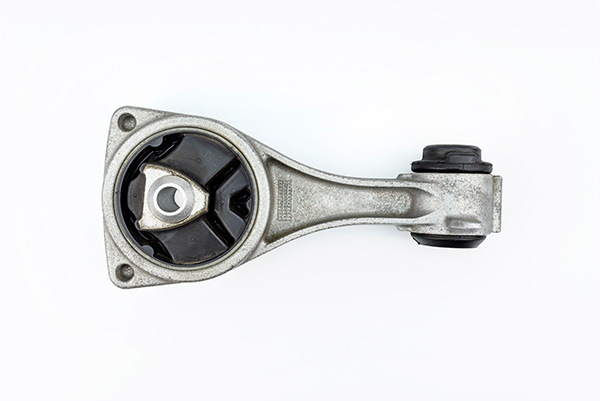
When engine mounts get tired, normal vibration and movement stop being filtered out and start making their way into the cabin. The change can be subtle at first, then grow into shakes, thumps, and odd noises that make the car feel older than it is. Here are five clear signs the mounts are past their best, why they happen, and what to do next.
1) Stronger Vibration at Idle
A smooth idle should feel calm through the seat and steering wheel. If you notice a low buzz in Drive at a stoplight that eases when you shift to Neutral, one or more mounts may not be isolating engine pulses anymore. Rubber hardens with age, and fluid-filled mounts can leak and collapse, so the engine’s natural vibration passes through the subframe and into the cabin. Because idle has fewer firing events per second, small problems are easier to feel there first.
2) Thump or Clunk When Shifting Into Gear
A sharp knock as the transmission engages from Park to Drive or Reverse often points to excess drivetrain movement. The mounts are meant to control how the engine rocks when torque is applied. If a mount has torn or settled, the engine can tip or slide just enough for metal-to-metal contact somewhere in the bay, which you hear as a thud. You might feel it as a quick jolt through the floor or center console, especially during quick back-and-forth parking maneuvers.
3) Shudder on Takeoff or During Aggressive Acceleration
On launch, the engine twists against its mounts. A worn front or rear (torque) mount allows extra rotation, which can show up as a brief shudder when you take off or a shake that appears right as the transmission upshifts under load. If the mount is badly collapsed, you may also notice exhaust contact or a rattle from heat shields that were never meant to be touched by a moving engine.
4) New Noises, Often With A/C or Steering Load
If turning on the A/C or turning the wheel at a standstill makes the cabin drone or buzz, the extra load is revealing a marginal mount. The engine control system raises idle to handle accessories, and that slight change in torque can be enough to create a hum or resonance. Listen for a change in pitch when shifting between Drive and Reverse at a stop. A consistent change with gear selection is a classic hint that the mounts are not containing movement.
5) Visible Sag, Leaks, or Excess Movement on Inspection
A mount that sits lower than its partner, shows cracked rubber, or has signs of leaked fluid is suspect. With the hood open and the parking brake set, a helper can shift between Drive and Reverse while you watch for obvious engine lift or twist. Large movements are a red flag. A technician may use a support bar and light prying to check for free play that should not be there. Any bright, shiny spots where components have rubbed are strong clues that the engine has been moving more than intended.
Why Engine Mounts Wear Out
Heat, time, and fluid exposure do the most damage. Rubber dries and cracks after thousands of heat cycles. Hydraulic mounts rely on internal fluid chambers; once the fluid leaks, damping fades quickly. Oil or coolant leaks soften rubber and speed deterioration. Driving patterns matter, too. Frequent stop-and-go, rough roads, and hard launches put more torque into the mount system. Even perfectly healthy engines create pulses. The mounts are the sponge, and every mile squeezes them a little more.
What Happens If You Put It Off
Living with extra vibration is tiring, but there is more at stake than comfort. Excess movement can strain flex pipes, pull on wiring and hoses, and stress CV joints or shift linkages. As parts touch that were never meant to meet, they wear in strange patterns, which can lead to intermittent noises that are harder to trace.
Catching weak mounts early usually keeps the repair simple, often limited to mounts and fresh hardware rather than a mix of secondary fixes.
Bring Back a Calm, Solid Drive With Valley Automotive in Covington, WA
If your car thumps into gear, buzzes in Drive at a stop, or shudders on takeoff, our technicians can pinpoint the cause and replace worn mounts with quality parts. We verify the repair with a road test and a bay check so the cabin feels quiet and composed again.
Schedule a visit with Valley Automotive in Covington, WA, and enjoy smooth, confident driving.